

Amer Sports released their second quarter earnings this week. Greater China growth was 35.5%, and everybody was talking about that number. But it only represents the business situation in the past three months.
What we should look at, from the industry perspective, is the potential of doors that can be opened in China.
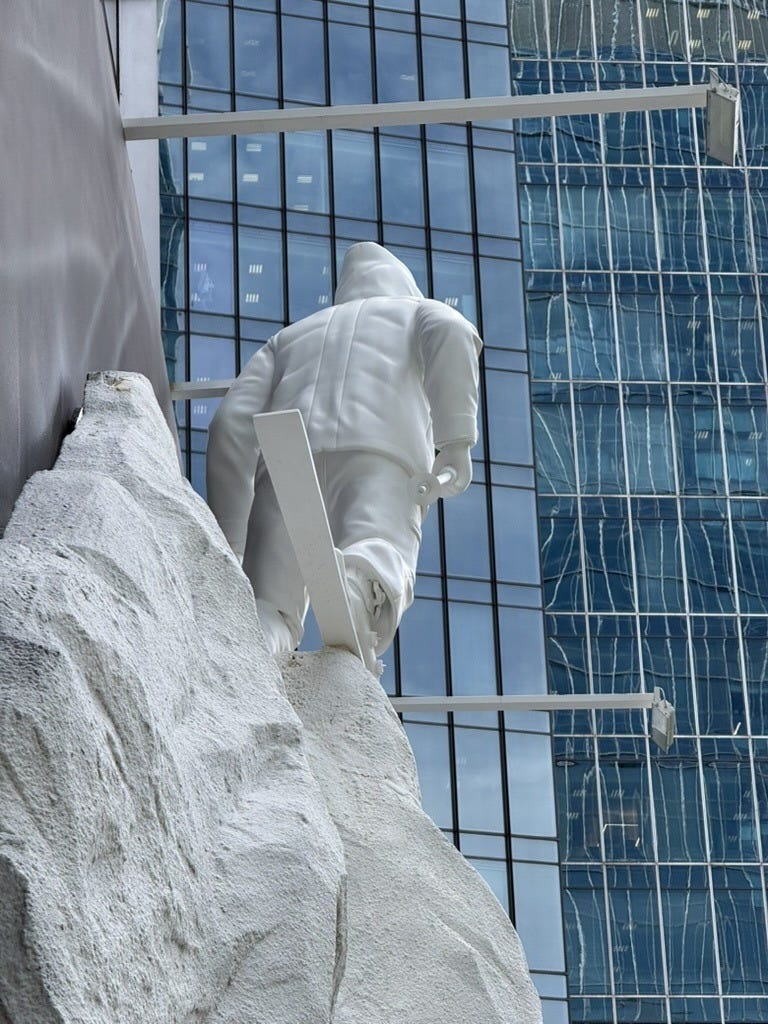
(Kerry Center, Shanghai, 2026. Photo: my own)
Arc’teryx in Greater China is around 140 doors now. Management from Amer has an estimated potential of 200 doors. For Salomon, the long term potential is around 400-500 doors. Arc’teryx in North America is around 75 doors, and the estimated potential is also 200 doors.
If we compare channel structure of North America and China side-by-side, they’re very different. In North America, there’s a large portion of multi-brand retailers as a key destination. For China, most stores are managed directly by brands.
In China, those who bought Arc’teryx and Salomon are actually buying for daily outfit, or maybe just the Gorpcore, so-called the outdoor style. They’re not climbing the summit or doing the trail runs. But the outdoor trend as a style of choice is essentially not very sustainable. So the brands are both working on extension and narrative adjustments.
Arc’teryx started as a supplier of professional equipment and technical apparel. In recent years, it started getting into footwear. Even though many shop for the looks (and the logo), it chose to focus on professional and hardcore outdoor scenarios.
For example, their documentary on developing a new climbing area in Guangxi, and the new products designed for rock climbing. In Shanghai, the Arc’teryx Museum, they have the display of the handmade first climbing harness from 1989. So it’s using slow but more sustainable outdoor culture incubation and narrative to solidify its premium position of professional outdoor brand.
Salomon started as a supplier of winter sports equipment and trail running. They have been very smart going after the outdoor trend, extending the business from a single pair of trail running shoes into a full body, head to toe outdoor lifestyle. This past quarter the segment grew 37.4%, driven by softgoods. That gives them a more sustainable foundation as a premium all-around outdoor performance + lifestyle brand.
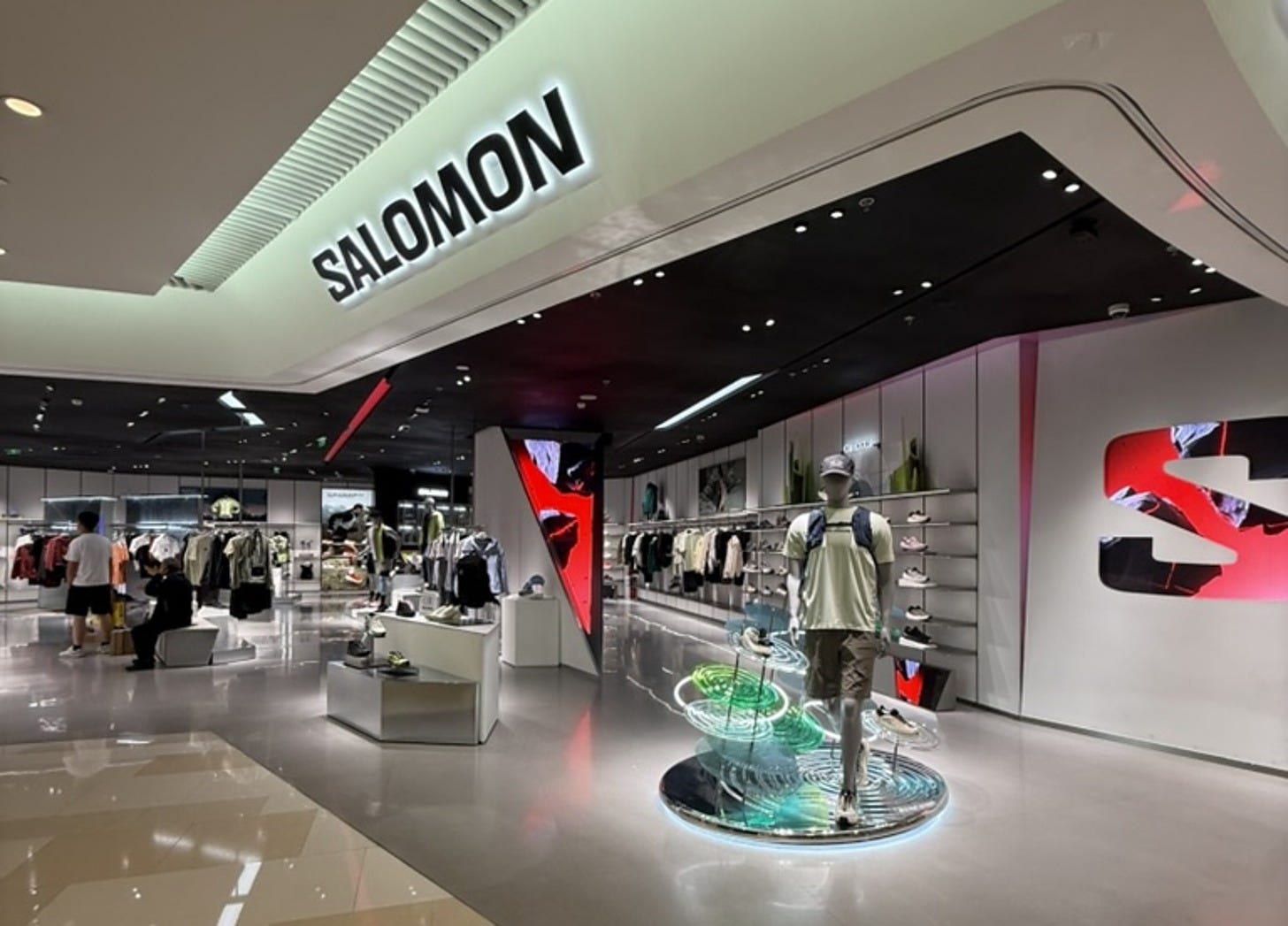
(Salomon Store Shanghai, 2026. Photo: my own)
Lastly, Wilson. This season it grew by 24.3%, and the previous three quarters the growth slowed from 16% to 13%. In this quarter you get to see a big jump. I’m not trying to get into the details regarding China tennis. I wrote a piece last October and I’m planning to have an update. More to come on this one.
Coming back to the stores, if you are selling outdoor looks, basically you invest in advertising, brand ambassadors and celebrity endorsers. But if you want to sell the authentic outdoor performance + lifestyle, you need the immersive retail for people to try and experience.
This quarter, Salomon’s direct and online grew by 52%, but the wholesale only grew by 25%, indicating the brand is bringing the touch points back into its own hands. As for Arc’teryx, with the 200 doors potential, they are beyond points of sale. They would be the pinnacle expression of the brand.
Let’s look at the demand side. There’s an official number of roughly 400 million outdoor and sports participants in China since 2021, and it has stayed at the same level through 2025. It’s a very big number with everything inside, ranging from weekend walk-in-the-park, all the way to summit climbing. So it cannot really answer where the real growth of the outdoor segment comes from. If we are only looking at the total number, we might even misread that the market has already stalled.
If we examine the structure of consumption, you can see that post-pandemic, the pan-outdoor dividend such as camping in the park, is fading. What really drives the growth is the vertical scenarios in depth. China sports administration report also shows that trail running shoe sales doubled in one year, and equipment sales for trekking, hiking and rock climbing are all booming.
It shows the core consumers are actually getting into the more professional and sometimes, more high-frequency activities. So the potential in the outdoor market goes back to how the brands can serve these core consumers in the long term while supporting the community and culture.
Capital and other brands are still getting into this business. Mammut has 70+ doors in China, and the Chinese private equity firm CPE just signed the full acquisition in July, with rumored 500-600 million euros. Other brands such as Houdini, Norrøna, Snow Peak, they’re all changing to the partners who are stronger and more knowledgeable about local consumers here with more resources to capture the growth potential. As for PE, they’re looking at the global potential, and they might not compete with Arc’teryx in scale, but everybody wants to get a piece of the pie in this business while outdoor is hot.
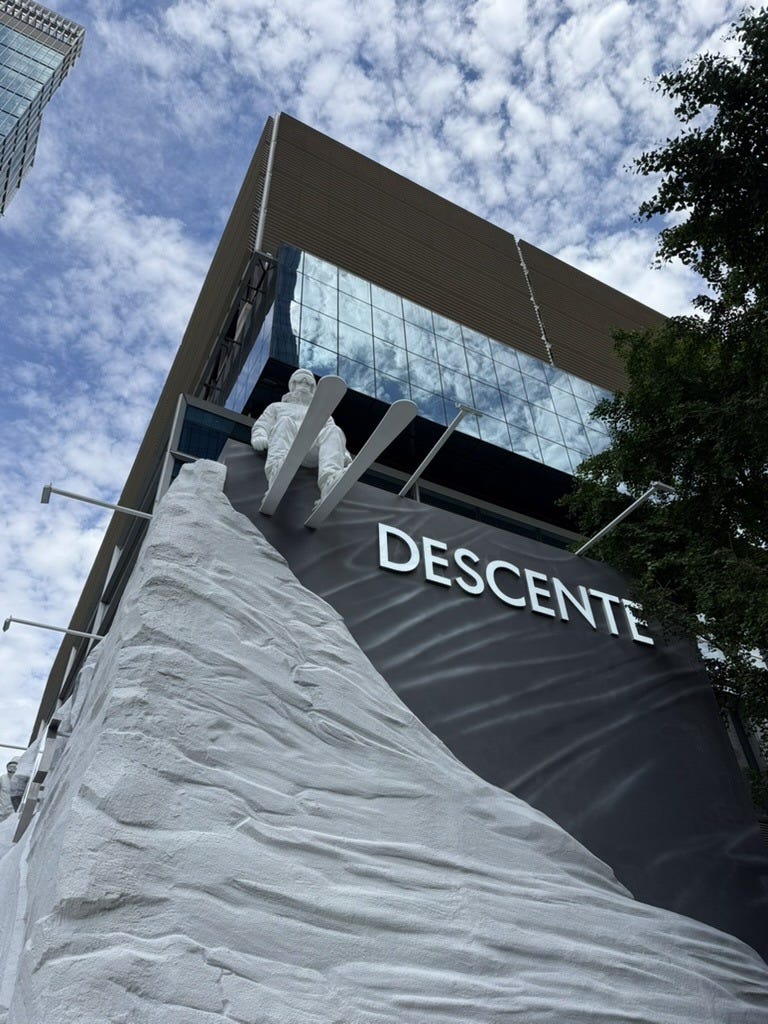
(Kerry Center, Shanghai, 2026. Photo: my own)
Overall China retail sales grew 1.2% from January to July in 2026, while Nike Greater China posted its 8th consecutive quarter of decline. In contrast, apparel and footwear, where sports and outdoor wear sit, grew 5.8%, while traditional equipment went negative. The demand is still there, but shifting from competitive sports to outdoor lifestyle categories.
Arc’teryx chose to be conservative about door expansion, focusing on professional outdoor narrative to strengthen their foundation. Capital and the followers chose to continue to invest and open new doors.
The potential of China’s outdoor market ultimately depends on those who entered for the fashion and trends: how many of them will actually stay and become long-term outdoor participants?
Working on a few China sports and outdoor projects currently, I’m also trying to answer this question.
So do you think the outdoor market in China, the ceiling is almost there?
Or, do you feel there’s still a lot of space?