

Last week the Financial Times profiled Qiaodan - How a pesky Jordan copycat dribbled around Nike in China (paywall), the Chinese sportswear company whose name is the local rendering of Jordan. I was one of the people quoted in it, and it is worth reading for the history.
What I want to add is the part a profile does not have room for, which is where Qiaodan actually sits relative to the rest of this category.
Wei Kan described the sportswear brands' growing clout as "a permanent change" in the market.
That's the line they used. What follows is what sits underneath it.
Most Chinese sports brands from Fujian (the epicenter of shoe manufacturing in China) came up the same way. They started making product to specifications set by international brands, then began developing product of their own, and eventually built brands on top of that. Along the journey, they learned from watching how those international brands they were manufacturing for actually operated, in design, in marketing, in how a retail network gets built. It was a shared learning process, and Qiaodan was one of them.
Whether a company borrowed something while it was still learning isn’t really the interesting part, since basically everyone in this category did the same. What actually separates those leading the pack from Qiaodan is whether they eventually built something they can own on top of what they borrowed, or whether the borrowed equity is still, 25+ years later, most of what they’ve got and how they’re perceived.
However, Qiaodan did build a real business: manufacturing capability, retail network (~6,000 stores across China, one by one, over two decades). These are all real things that could not be borrowed. The gap is the pricing power that lets you charge more for a shoe in the category, because its brand equity was still perceived as borrowed from Nike’s Jordan brand.
For a long time, that borrowed equity worked. Not just the similarity of trademarks. “Jordan - the name” arrived in China well before “Jordan - the product” did for the majority of Chinese consumers. Michael Jordan had already retired by the time Nike established the brand in this market properly in the early 2000s, and even then, if you were in a third-tier city back then, there was close to zero Nike store to walk into and e-commerce wasn’t really there yet. Basically Nike / Jordan had a name everyone knew, but no access to the real products. Qiaodan had stores.
That gap no longer exists since the 2010s. E-commerce has become accessible everywhere across the country. Nike has been working with local partners pushing into lower-tier cities. Some brands such as Anta and Li-Ning, that grew alongside Qiaodan, have spent that same period investing in brand, design, and product innovation that customers want to pay premium for, or scaling brand portfolio through acquisition & licensing.
But Qiaodan spent it scaling their business through e-commerce and more doors. If we look at their own filings, revenue ~2X between 2010 and 2021. But their price tiering stayed basically where it started, still below where Anta, Li-Ning, Xtep and 361 sit today.
Qiaodan cleared listing review at the Shanghai exchange back in 2011, then sat there for over a decade, first through the trademark case with Michael Jordan and then well past it. In May 2024, the company decided to pull the application, citing a change in its strategy. 13 years of waiting, and they walked away from it.
The other thing that changed is consumer landscape. Now, Chinese shoppers know a lot more than they did 15 years ago, and they have many more international / domestic options to compare against. Those brands that did the work making sure people can tell the difference in brand, design, and product benefits are the ones holding pricing power.
In 2020, Qiaodan bought China rights to the heritage football brand Umbro for $62.5 million. Not the kind of deals I wrote about where a company takes over a brand outright and builds a real position on it.
This is a licensing model for China market only. It gives them a second name to grow their business, but this doesn’t solve the borrowed brand identity issue they’ve been sitting on for 25+ years.
After the ruling, they adjusted the brand identity with a Chinese name ZhongQiao that reads as distinct from the one that caused trouble. But this is just the opening.
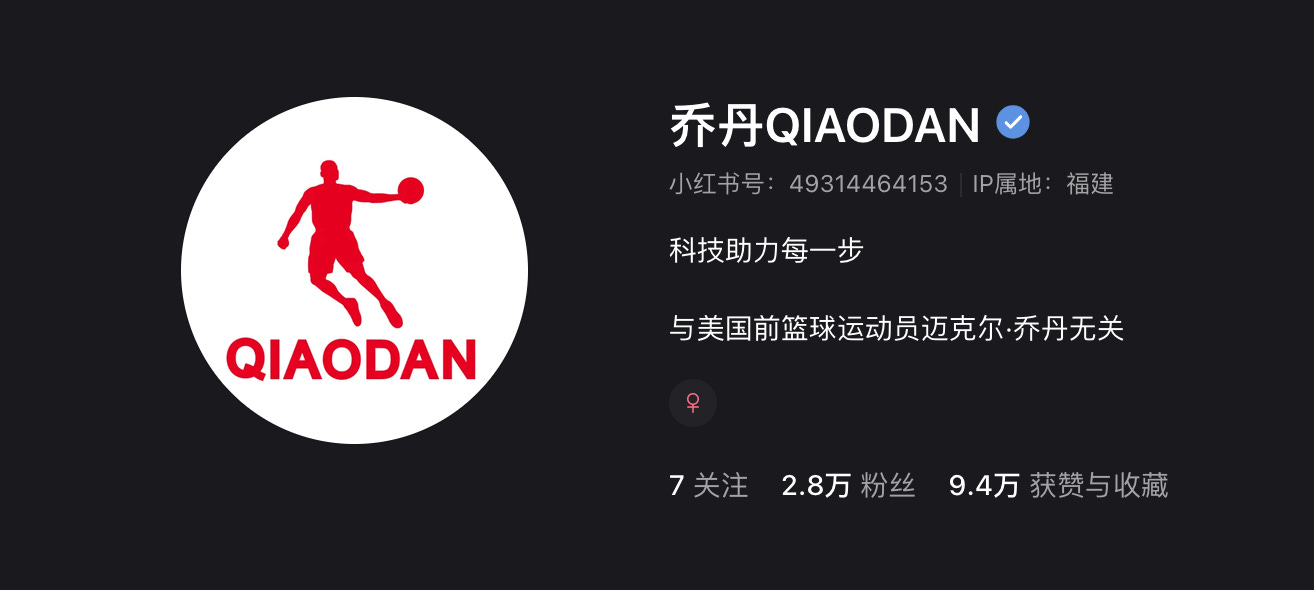
Qiaodan's official Xiaohongshu account.
The line under the tagline reads: "No connection to the former American basketball player Michael Jordan."
And they are doing the work now. Elite marathon athletes, an NBA endorser, a running franchise with latest technology behind it, a decade-plus title partnership with one of China’s biggest marathons, IP collabs that land with younger consumers. Anyone who follows their channels can see the investment
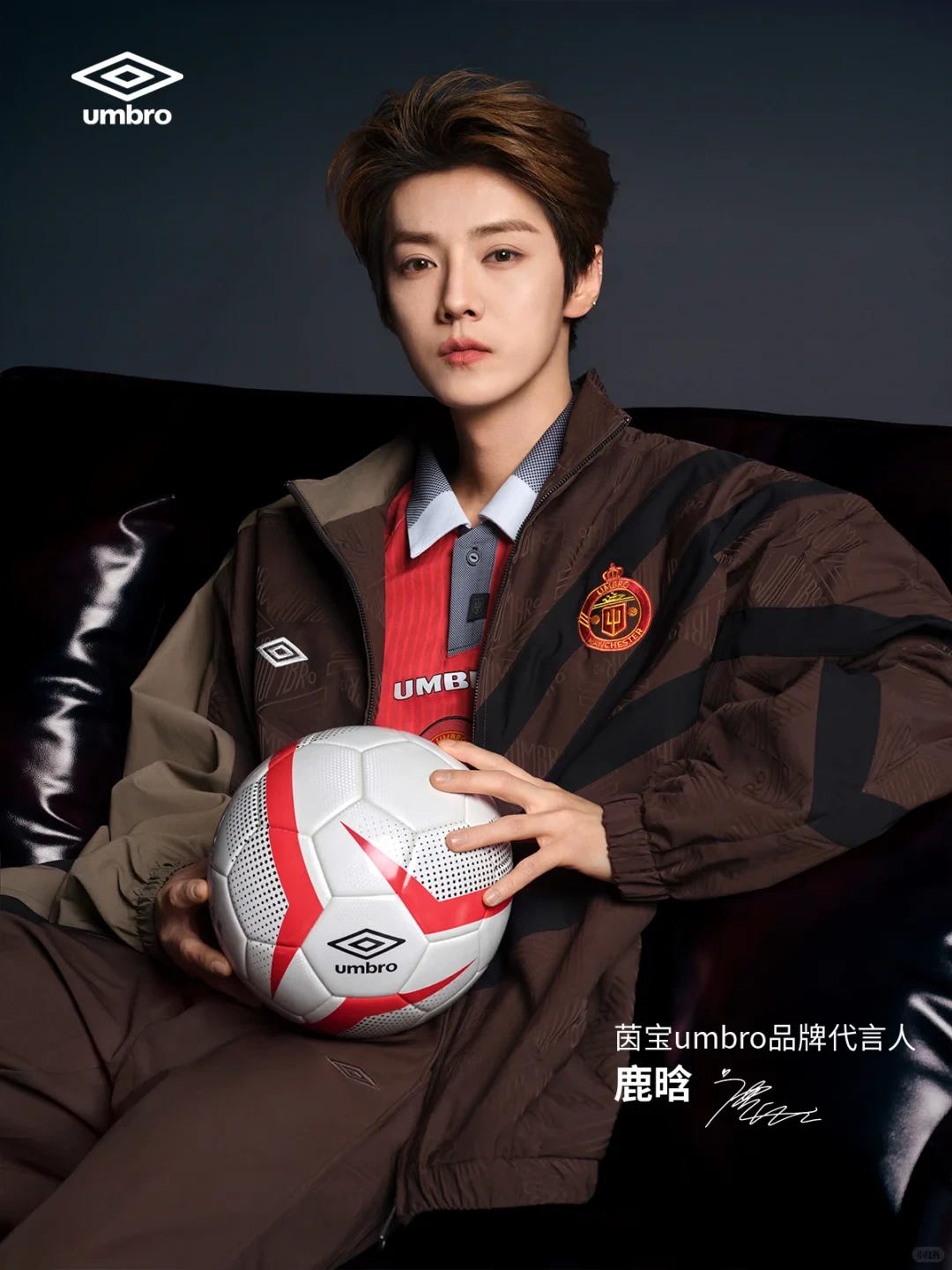
Umbro China’s brand ambassador campaign with Lu Han.
Qiaodan has been investing seriously in the licence since acquiring it in 2020.
The problem is that this is the work they should have been doing twenty years ago, when the borrowed name was doing the heavy-lifting for them instead. Now they are doing it from a harder starting position: a lower price tier, a name they had to change, a listing they walked away from, and an economy that is not helping.
That is what the shortcut actually cost. Not the lawsuit, and not the embarrassment. The years.
I wrote earlier this year about the two kinds of badge a brand can carry.